 English
 Deutsch
 Español
 Français
 Italiano
 Português

Mental Health in the Digital Age: Apps and Strategies to Reduce Stress
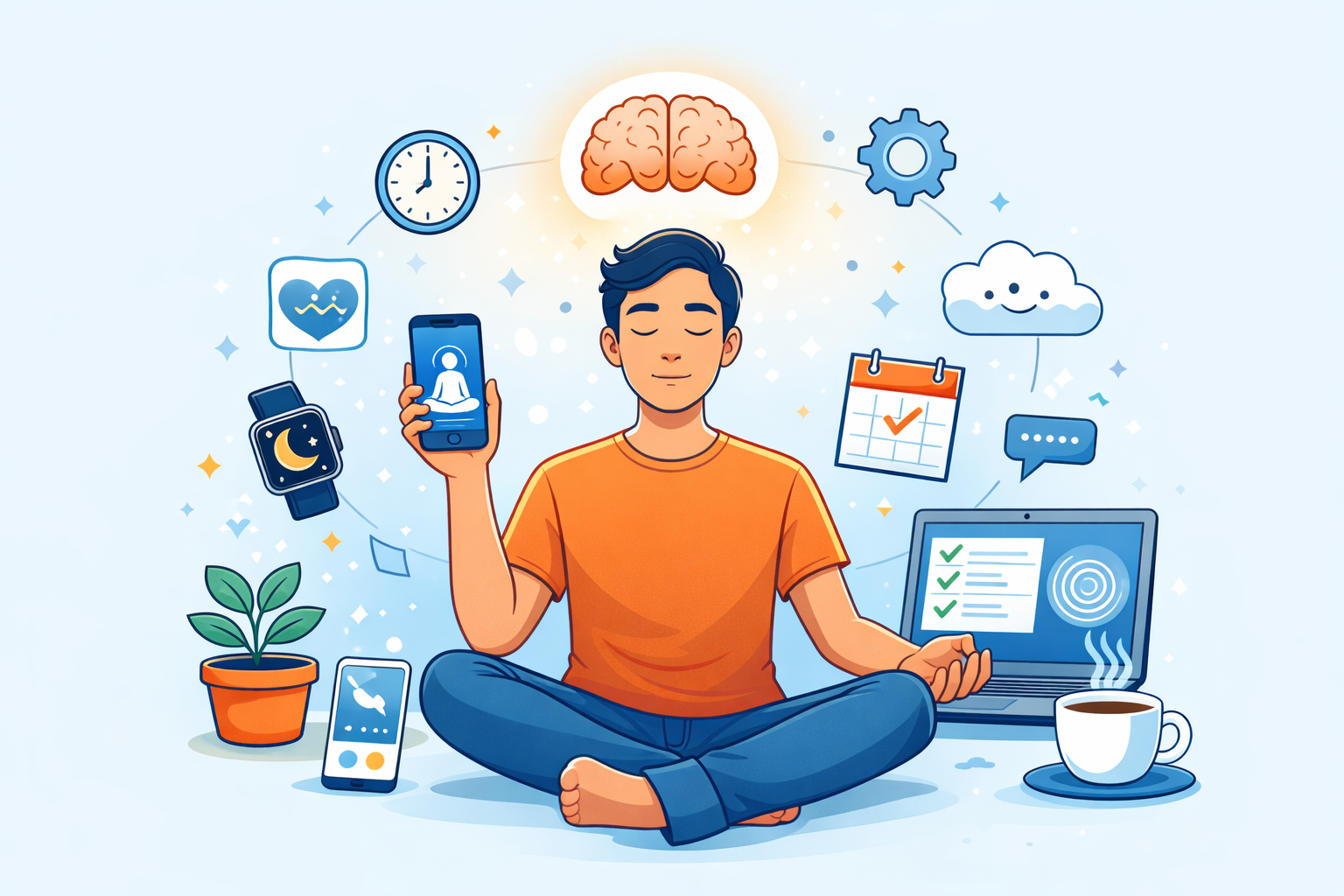
We live in a time when we are connected all the time. Our phone wakes up with us, the computer follows us at work, social media fills the breaks, and before we realize it, the whole day has passed in front of a screen. Technology has brought many conveniences—there’s no denying that. But it has also brought something many people feel in their daily lives: mental fatigue, anxiety, stress, and difficulty disconnecting.
If you have ever felt overwhelmed, with your mind always racing, trouble sleeping, or the feeling that you can never truly rest, know this: you are not alone. Mental health in the digital age has become an essential topic—not only for psychologists and specialists, but for anyone who wants to live better.
The good news is that technology itself, when used well, can be a great ally. Today there are apps, tools, and digital strategies that help organize your routine, reduce stress, improve focus, and even take care of your emotions. The secret is not to run away from technology, but to learn how to use it in your favor.
In this article, you will discover:
- Why digital stress is so common
- How technology affects mental health
- What types of apps can help
- Practical strategies to reduce stress in everyday life
- How to create a healthier relationship with the digital world
All of this in simple, human, and straight-to-the-point language.
The impact of the digital age on mental health
We have never been so connected. Messages arrive at any time, notifications never stop, social media shows “perfect” lives, and work often invades personal time. This overload of stimuli creates an almost constant state of mental alert.
Among the most common effects are:
- Anxiety and a constant sense of urgency
- Difficulty concentrating
- Mental fatigue even without physical effort
- Sleep problems
- A feeling of overload and burnout
The human brain was not made to deal with so much information at the same time. When there are no breaks, stress builds up silently. And over time, this affects not only productivity, but also mood, relationships, and quality of life.
Taking care of mental health today is just as important as taking care of the body. And it starts with small changes in the way we use technology.
The role of apps in mental health
Many people think apps are only for distraction or wasting time. But the truth is that there are many applications created exactly to help with mental well-being.
These apps can help you:
- Organize your routine and reduce overload
- Build healthier habits
- Practice meditation and breathing
- Improve sleep
- Control anxiety
- Increase focus and productivity without stress
They do not replace a health professional when needed, of course. But they are powerful support tools, especially for those who want to start taking better care of their own mind.
- Meditation and breathing apps: calming the mind
Meditation stopped being something “mystical” a long time ago. Today, it is recommended by doctors and psychologists as an effective way to reduce stress, improve concentration, and balance emotions.
Guided meditation and breathing apps help you:
- Pause for a few minutes
- Breathe consciously
- Calm racing thoughts
- Reduce body tension
Even 5 or 10 minutes a day already make a difference. The most important thing is to build the habit.
Breathing well sounds simple, but when we are stressed, we breathe poorly—and that makes everything worse. These apps work like a gentle reminder: “Hey, slow down a bit. It’s okay to stop.”
- Organization apps: less chaos, less stress
A lot of anxiety comes from the feeling:
“I have so much to do and I don’t know where to start.”
When the mind is full of loose tasks, worries, and deadlines, stress increases. Apps for:
- To-do lists
- Daily planning
- Calendars
- Project organization
Help take the weight off your head and put it on paper (or on the screen).
This brings:
- More clarity
- More control over your time
- Less feeling of overload
- More calm to focus on one thing at a time
Organization is not just about productivity. It is about taking care of your mental health.
- Sleep apps: sleeping better is living better
Sleeping poorly affects everything: mood, focus, patience, memory, and even physical health. In the digital age, many people:
- Go to bed looking at their phone
- Wake up several times during the night
- Sleep less than they need
- Live feeling tired
There are apps that help you:
- Create a sleep routine
- Control schedules
- Relax before going to bed
- Monitor sleep quality
Sleeping well is not a luxury. It is a basic need for a healthy mind.
When sleep improves, stress decreases, anxiety goes down, and life feels lighter.
- Focus apps: less distraction, more peace of mind
Notifications, social media, messages, short videos… everything competes for your attention all the time. This fragments your focus and tires your mind.
Focus and time management apps help you:
- Work in concentration blocks
- Reduce distractions
- Create conscious breaks
- Work more calmly and efficiently
Less distraction = less mental stress.
More focus = more sense of control and accomplishment.
Digital strategies to reduce stress in everyday life
Besides apps, there are simple strategies you can apply right now:
- Take real breaks from screens
Stand up, stretch, look out the window, take a deep breath. Your brain needs rest.
- Turn off unnecessary notifications
You don’t need to be interrupted all the time. Control what gets your attention.
- Set times for social media
Social media is not the problem. Excess is. Use it with intention, not on autopilot.
- Create “offline” moments
Even if it’s just 30 minutes a day. Your mind will thank you.
- Use technology as a tool, not as an escape
Ask yourself: Is this helping me, or is it just distracting me?
Mental health at work and in studies
At work and in studies, digital stress is even more common:
- Many deadlines
- Many messages
- Many demands
- Little mental rest
Using the right digital tools can:
- Improve organization
- Reduce pressure
- Increase clarity about tasks
- Prevent burnout
But it is also important to learn to:
- Say “no” when possible
- Respect time boundaries
- Not live always in “urgent mode”
Healthy productivity is the kind that does not destroy your mental health.
The importance of humanizing your own routine
In the middle of so much technology, it’s easy to forget that we are human, not machines. We need:
- Rest
- Silence
- Breaks
- Real conversations
- Simple moments
Technology should serve to make life easier, not heavier.
Taking care of mental health is an act of respect toward yourself.
When should you seek professional help?
Apps and strategies help a lot, but they do not replace a professional. Seek help if:
- Stress is constant and intense
- Anxiety interferes with your daily life
- There is deep sadness or lack of motivation for a long time
- Sleep is always bad
- You feel emotionally exhausted
Taking care of your mind is just as important as taking care of your body.

Anacleto Mulandeza
CEO / Co-Founder
Doutor em Ciências da Informação pela Universidade Federal Rural do Rio de Janeiro (UFRRJ). Atualmente, ocupa o cargo de Professor Adjunto no Departamento deCiências e Tecnologias da UFRRJ, onde contribui com sua expertise acadêmica e pesquisa na área de Ciências da Informação. Seu trabalho se caracteriza pela integração entre a teoria e a prática, buscando sempre promover o desenvolvimento de novas abordagens pedagógicas e científicas dentro de seu campo de atuação.
Popular Tools
Recent Posts